pctechguide.com

  • Home
  • Guides
  • Tutorials
  • Articles
  • Reviews
  • Glossary
  • Contact

How To Use The Google Authenticator App to Protect Your Google Account

In a previous post, I talked about enabling two factor authentication on your Google account. Just to rehash, two-factor authentication adds another layer of protection in your authentication method. You still login using your username and password. But, before you can go any further, a random number is generated and sent to a registered device. The device is typically a mobile phone. But, it can also be a specialty device that generates these numbers.

This means that even if someone guesses your password, they will still need access to your registered device to receive the special code. And, if they somehow get a special code one time it will change in a short amount of time. Two-factor authentication is so easy to set up that it really should be used when possible to add that extra layer of security to accounts.

You can read the previous post on how to enable two-factor authentication on the Google account. But, if you stop there you will receive your codes by text messaging. There is also an app you can install on your phone called the Google Authenticator App that will generate those codes for you. This is good if you do not want to pay for texts or if you would just rather have an app controlling this.

The first thing you need to do is to install the Google Authenticator App on your mobile device. You can go here to find the links for your appropriate device. Once you have installed the app on your phone, then you can proceed with the next steps.

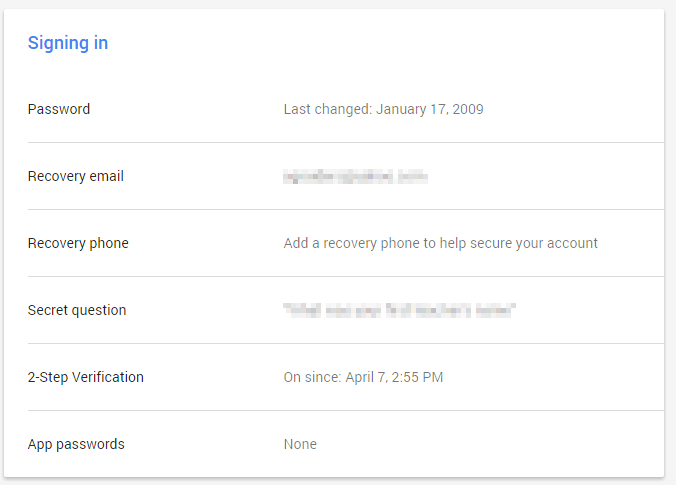
Next you need to login to your Google account at https://accounts.google.com. Once you will scroll down to the area that says “Signing In” and click on the “2-Step Verification Section”
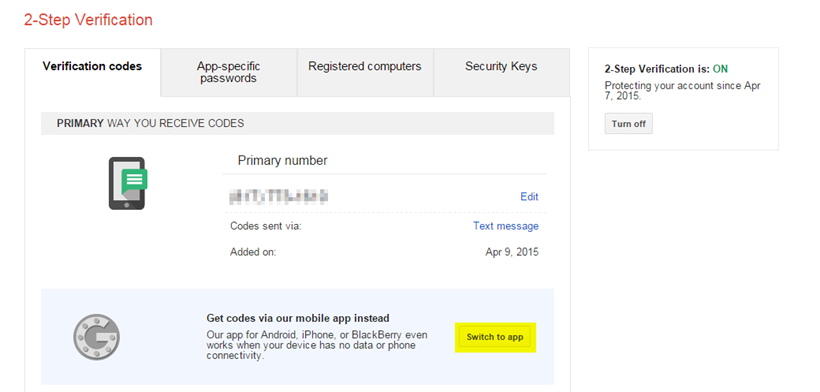
You will be taken to the next screen. As you will see the default when you enable 2-factor authentication is to use Text Message. To change to Google Authenticator App, you will need to click on the button that says “Switch to App”


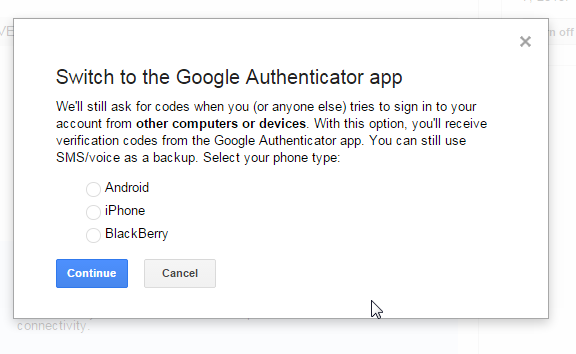
The next screen will have you pick your device type
The next step will register your device with your account. You will get a screen with a barcode in the middle. This is what the screen will look like. But, you need to add an account to your app first
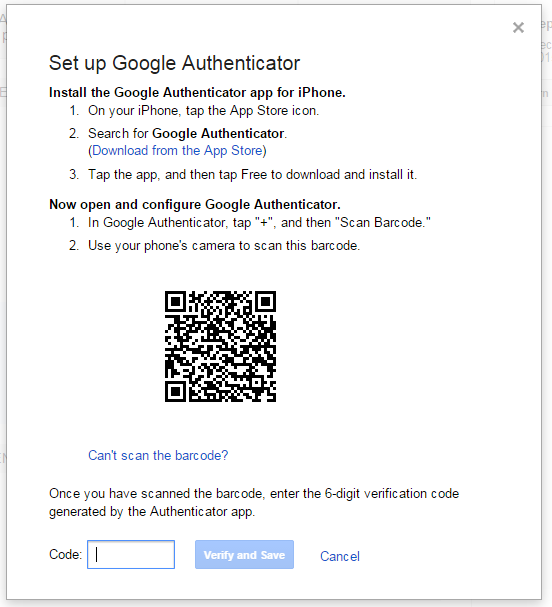
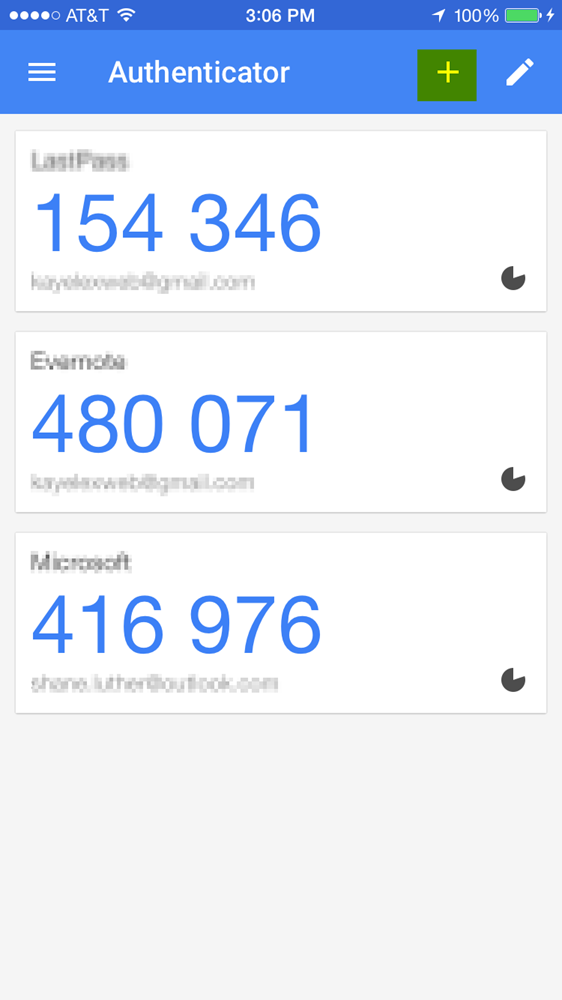
Open the app on your phone and click on the + sign to add an account
 

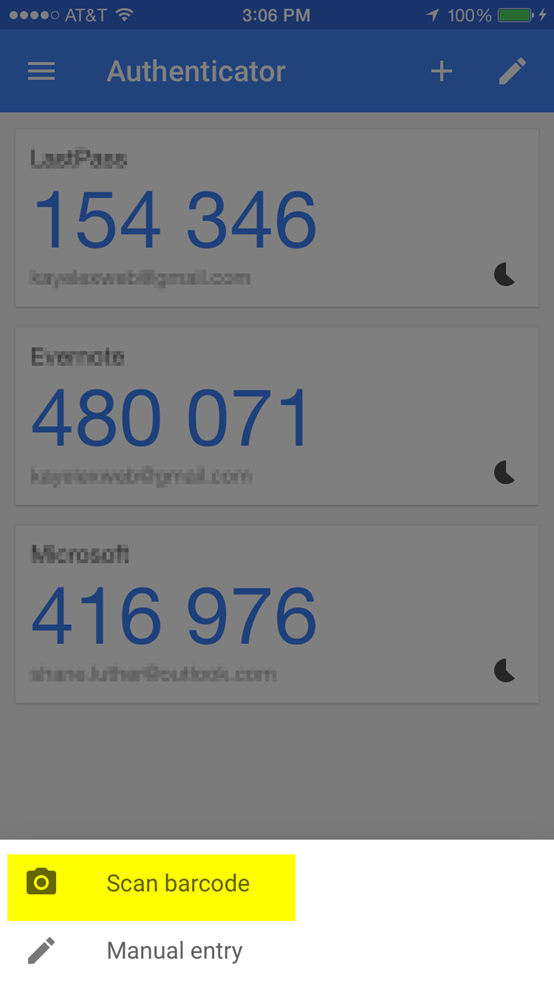
Click on the link that says “Scan Barcode”. It will open up a camera where you can hold it towards the barcode on your computer screen.
 

As you can see it has now added another entry for Google. This is the one you will use to login from now on
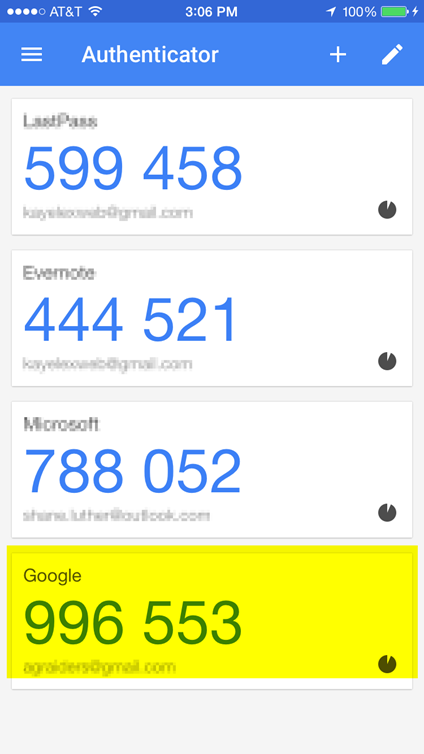
Your account is now set up to use the Google Authenticator App to login. From now on when you log into any Google property like Gmail, Calendar, Tasks, etc, you will use your username and password. But, it before going any further it will ask you for the 6-digit code on your phone inside the app. This code changes every 30 seconds on your phone as shown by the count down icon. If you do not enter the code in before the time expires, you will have to wait for a new number to be generated.


Filed Under: Articles

Latest Articles

13 Funky Images of Laptops

In our digital age, laptops have become our faithful companions, indispensable tools for work, leisure, and everything in between. They've evolved from clunky machines into sleek, powerful devices that enable us to connect, create, and explore the world at our fingertips. In this blog post, we … [Read More...]

Cyber Threat Hunting

What is Cyber Threat Hunting? Cyber Threat Hunting is the practice of proactively searching through computer networks for advanced threats and malicious factors that may have slipped past an SMEs traditional security endpoint. Fortunately, IT support companies like EC-MSP can provide new security … [Read More...]

Utilizing the Windows Repair Function to Fix Problems with Solid State Drives

In our last post, we covered some basic Windows reporting features to help understand hard drive problems. We wanted to delve into more detail on another Windows function, which focuses on actually repairing these issues. This feature can be especially useful for fixing problems with solid state … [Read More...]

Top Taplio Alternatives in 2025 : Why MagicPost Leads for LinkedIn Posting ?

LinkedIn has become a strong platform for professionals, creators, and businesses to establish authority, grow networks, and elicit engagement. Simple … [Read More...]

Shocking Cybercrime Statistics for 2025

People all over the world are becoming more concerned about cybercrime than ever. We have recently collected some statistics on this topic and … [Read More...]

Gaming Laptop Security Guide: Protecting Your High-End Hardware Investment in 2025

Since Jacob took over PC Tech Guide, we’ve looked at how tech intersects with personal well-being and digital safety. Gaming laptops are now … [Read More...]

20 Cool Creative Commons Photographs About the Future of AI

AI technology is starting to have a huge impact on our lives. The market value for AI is estimated to have been worth $279.22 billion in 2024 and it … [Read More...]

13 Impressive Stats on the Future of AI

AI technology is starting to become much more important in our everyday lives. Many businesses are using it as well. While he has created a lot of … [Read More...]

Graphic Designers on Reddit Share their Views of AI

There are clearly a lot of positive things about AI. However, it is not a good thing for everyone. One of the things that many people are worried … [Read More...]

Guides

  • Computer Communications
  • Mobile Computing
  • PC Components
  • PC Data Storage
  • PC Input-Output
  • PC Multimedia
  • Processors (CPUs)

Recent Posts

Serial ATA (SATA) interface guide

In 1999 the Serial ATA (SATA) Working Group was formed, a group comprising companies as illustrious as APT Technologies, Dell, IBM, Intel, … [Read More...]

Cabling

In 1985, the Computer Communications Industry Association (CCIA) requested the Electronic Industries Association (EIA) … [Read More...]

Fake Antivirus Removal

Antivirus Studio 2010 is mainly promoted by malicious websites and fake anti-malware scanners. However, sometimes it comes with other malware … [Read More...]

[footer_backtotop]

Copyright © 2026 About | Privacy | Contact Information | Wrtie For Us | Disclaimer | Copyright License | Authors