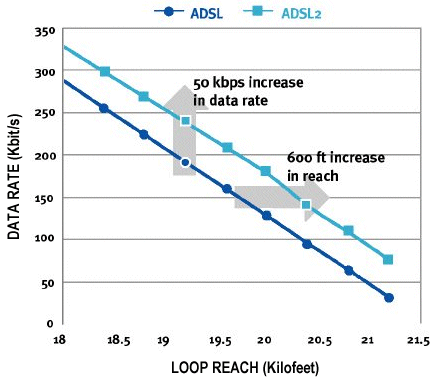
Even before designs based on the first generation standards (ITU G.992.1 and G.992.2) had been perfected, the ITU had been working on a latter revisions of the ADSL standard. In July 2002, the ITU … [Continue reading]
Even before designs based on the first generation standards (ITU G.992.1 and G.992.2) had been perfected, the ITU had been working on a latter revisions of the ADSL standard. In July 2002, the ITU … [Continue reading]
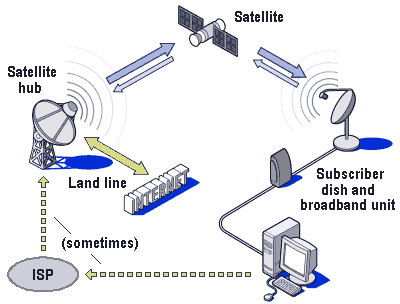
Whilst the advent of its RADSL variant may have increased the range of ADSL from 3.5km to 5.5km, the fact is that the technology will always be literally beyond the range of many living in rural … [Continue reading]
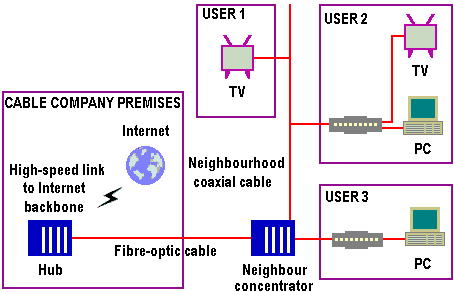
Cable modems offer the prospect of fast and affordable Internet access by leveraging existing broadband cable TV networks. The technology is more applicable to home than business users since it is residential areas that are more likely to be wired … [Continue reading]
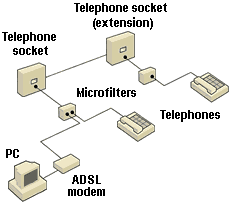
Wires-only was one of the first of many BT initiatives during 2002 designed to kickstart the adoption of broadband, appearing on a wholesale basis at the start of the year and reaching consumers via ISPs over the following months. Also … [Continue reading]
In the UK, BT (British Telecom) commenced pilot trials of its ADSL technology - in north and west London - in late 1998. Early the following year, the company announced that it planned to spend £250m … [Continue reading]
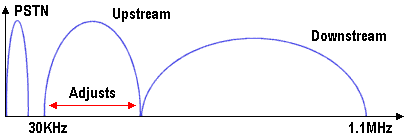
RADSL, like ADSL, operates faster in one direction than in the other and has the same transmission limits as ADSL. But as its name suggests, it adjusts transmission speed according to the length … [Continue reading]

ADSL2+ reached consent at the ITU in January 2003, joining the ADSL2 standards family as G.992.5. The ADSL2+ recommendation doubles the downstream bandwidth, thereby increasing the downstream data rate on telephone lines shorter than about … [Continue reading]
During 1997 a number of companies were independently working on versions of splitterless DSL. The theory behind splitterless DSL is that it requires no technician to come to your house to install … [Continue reading]
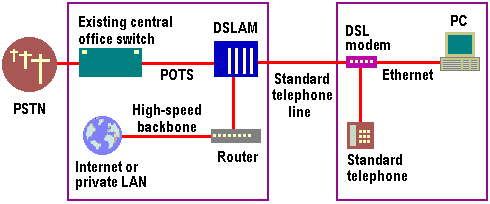
ADSL has several similarities to ISDN. Both technologies require that copper phone lines be electrically clean and both can operate only a limited distance away from the phone company's local … [Continue reading]
xDSL is a catchall name for a variety of DSL (Digital Subscriber Line) technologies developed to offer phone companies a way into the cable TV business. It isn't a new idea; Bell Communications Research Inc. developed the first DSL back in 1987 … [Continue reading]