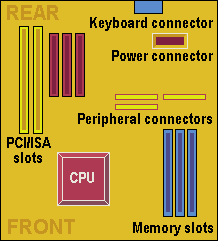
The Baby AT (BAT) format reduced the dimensions of the motherboard to a typical 9in wide by 10in long, and BAT motherboards are generally characterised by their shape, an AT-style keyboard connector … [Continue reading]
The Baby AT (BAT) format reduced the dimensions of the motherboard to a typical 9in wide by 10in long, and BAT motherboards are generally characterised by their shape, an AT-style keyboard connector … [Continue reading]
Early PCs used the AT form factor and 12in wide motherboards. The sheer size of an AT motherboard caused problems for upgrading PCs and did not allow use of the increasingly popular slimline desktop cases. These problems were largely addressed by … [Continue reading]
The BIOS has evolved very little since the birth of the PC in 1981, remaining a chunk of hand-crafted assembly language code most users know only for the series of arcane configuration and test messages fleetingly displayed when they turn … [Continue reading]
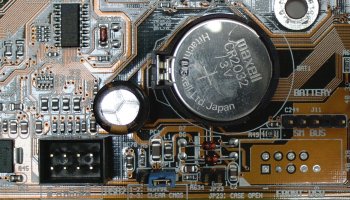
Motherboards also include a separate block of memory made from very low power consumption CMOS (complementary metal oxide silicon) RAM chips, which is kept alive by a battery even when the PC's power is off. This is used to store basic … [Continue reading]
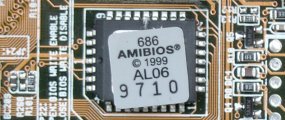
All motherboards include a small block of Read Only Memory (ROM) which is separate from the main system memory used for loading and running software. The BIOS will most likely be stored in a 32-pin chip, which can typically be identified … [Continue reading]
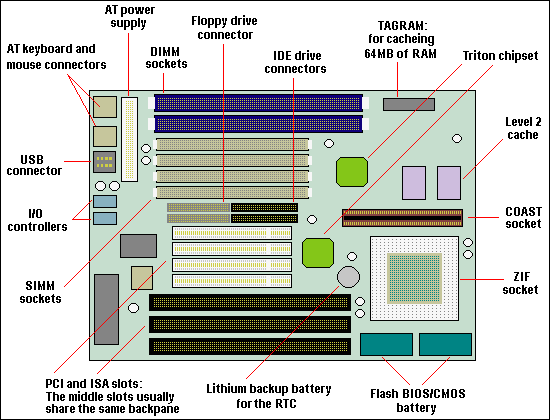
The original PC motherboard had a minimum of integrated devices, just ports for a keyboard and a cassette deck (for storage). Everything else, including a display adapter and floppy or hard disk controllers, were add-in components, connected via … [Continue reading]
In early 2001 the battle between IEEE 1394 and USB advanced another step with the 1394 Trade Association's approval of specifications for a faster version of IEEE 1394, called IEEE 1394b. The new standard … [Continue reading]
While USB was originally designed to replace legacy serial and parallel connections, notwithstanding the claims that they were complementary technologies, there can be little doubt that USB 2.0 specification was designed to compete with … [Continue reading]
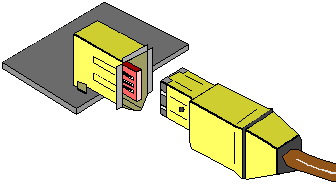
Also widely referred to as FireWire, IEEE 1394 was approved by the Institute of Electrical and Electronics Engineers (IEEE) in 1995. Originally conceived by Apple, who currently receives $1 … [Continue reading]
In early 2001 the battle between IEEE 1394 and USB advanced another step with the 1394 Trade Association's approval of specifications for a faster version of IEEE 1394, called IEEE 1394b. The new standard … [Continue reading]