Co-incident with the launch of Dixon, Intel also introduced its first Mobile Celeron CPUs, at clock speeds of 266MHz and 300MHz. Technically, these CPUs were distinguished from the Dixon range only … [Continue reading]
Illustrated guide to Cyrix’s MediaGXi technology

The merging of graphics, audio, memory control and the PCI interface onto the microprocessor itself, made Cyrix's revolutionary MediaGX architecture a natural for use with notebook PCs, delivering … [Continue reading]
Intel Mobile Pentium II technology guide
The natural progression of the low-power Deschutes family of Pentium II processors to the portable PC market took place with the launch of the Mobile Pentium II range in April 1998. The new processor, … [Continue reading]
Illustrated Intel Pentium Tillamook CPU technology guide
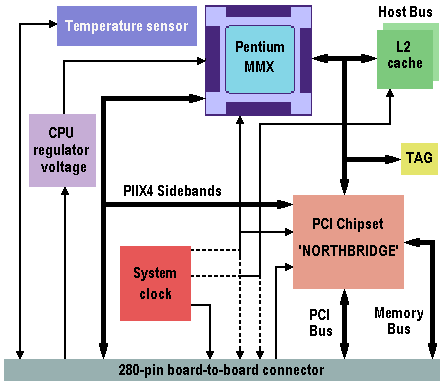
Conspicuous by its absence from Intel's launch of MMX at the beginning of 1997 was a 200MHz version of the Pentium MMX for notebooks. This omission was addressed before the year was out, however, … [Continue reading]
Mobile Intel Pentium MMX technology guide
In January 1997 the first mobile Pentiums with MMX technology appeared, clocked at 150MHz and 166MHz. Initially these were built on Intel's enhanced 0.35-micron CMOS process technology with the … [Continue reading]
V92 Technology
Announced in 2000, the ITU's V.92 analogue modem standard has the same download speed as the V.90 standard (56 Kbit/s) but increases the maximum upload speed from 33.6 Kbit/s to 48 Kbit/s. As well as … [Continue reading]
V90 Technology
The V.90 standard is neither x2 nor K56Flex, although it does use techniques from both. It is actually two standards in one, the specification defining a digital modem and analogue modem pair capable … [Continue reading]
56Kbps Modems
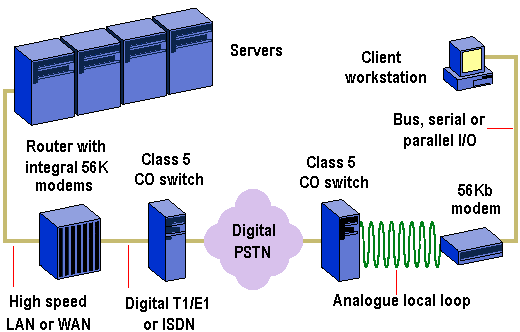
1997 saw the arrival of the 56 Kbit/s modem, despite the absence of any international standard for this speed. The K56Flex group of companies, including 3Com, Ascend, Hayes, Motorola, Lucent and Rockwell, used Rockwell chipsets to achieve the faster … [Continue reading]
Communication Standards
Over the years, modem standards have tended to develop in a rather haphazard way. As well as defining the speed at which a modem may operate they determine how, exactly, a modem compresses data … [Continue reading]
Voice Modems
Voice modems are part of the current communications convergence trend - the merging of voice, data, fax, and even video - which is affecting all aspects of data communications. Consider the Internet, … [Continue reading]